
Nuri Tam, Opinion Writer
“I deserve sunshine.”
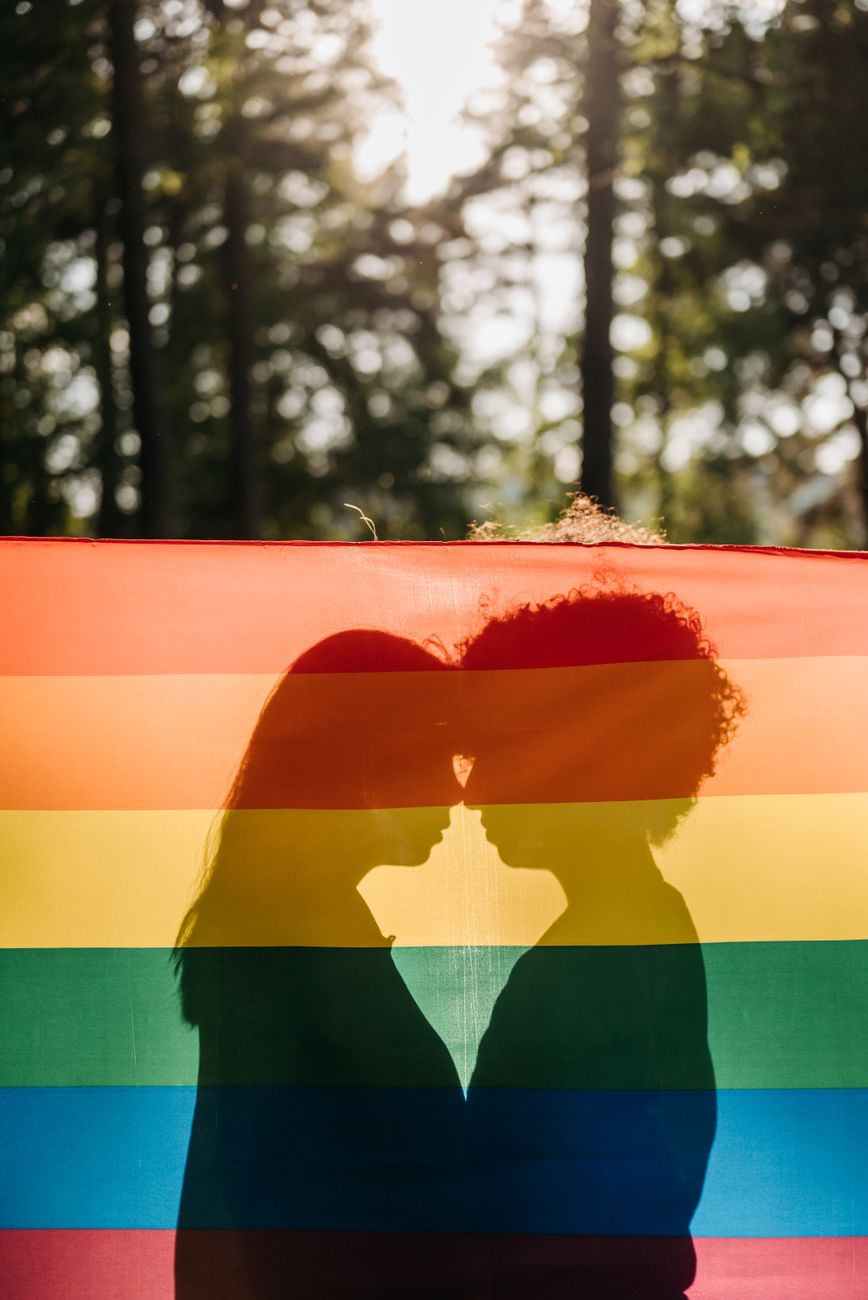
This phrase has been all over social media, accompanying the recent TikTok trends of people in the LGBTQ+ community sharing their stories in honor of Pride Month. These videos are slideshows featuring a picture of a queer individual, their experience related to their queerness, and a concluding slide captioned, “I deserve sunshine.” In the LGBTQ+ community, this phrase means that they deserve to feel happy and safe, living openly with their sexuality.
A common theme in many of the videos is heteronormativity, the idea that a straight and cisgender relationship is the norm. These assumptions are actually combatted with the consumption of the media because the TikTok trend features less talked about narratives that challenge heteronormativity. In doing so, it decreases the harm bisexual and pansexual women face because it reduces a social phenomenon known as sexuality erasure. Because women who are bisexual or pansexual can also be attracted to men, this erasure occurs when their sexuality is overlooked when they are seen in straight-passing relationships.
Dalia Ramirez, a pansexual woman, opens up about how heteronormativity has affected her because she didn’t see her experiences reflected or discussed openly. Ramirez says, “For me, [pansexuality] means that I’m open to loving someone regardless of their gender. Being in a long-term relationship with a man has sometimes made people assume I’m heterosexual or question my identity. Those experiences have made me more guarded about disclosing my sexual orientation. It’s not because I’m ashamed of being pansexual, but because I know it often leads to questions or explanations.”
Conversely, if women are in relationships with other women, their sexuality is often not taken seriously because it’s frequently fetishized by men. Therefore, queer women are caught in a double standard: their sexuality is erased when they’re with men and objectified when they’re with women.
Morgan Davis, a lesbian woman, expands on her thoughts on the fetishization of sapphic (women attracted to women) relationships in film and television. “I find there are instances where a sapphic relationship is shown to cater to a male gaze rather than being rooted in reality or a female gaze. This includes when the sexual aspect of their relationship is overdone or overemphasized in a manner that objectifies the woman,” she explains.
Although traditional media have struggled to portray queer women’s relationships authentically, social media has allowed women to share the complexities of their own narratives. The exposure of queer struggles on media platforms like TikTok differs from fictional representation because there can be back-and-forth conversations on social media between queer women’s lived experience. Social media provides support by spreading awareness and validating a wider range of identities than what is normally shown in on-screen portrayals. I have learned so much about the experiences of different queer identities just by scrolling through TikTok and have developed an understanding and empathy for people in the LGBTQ+ community. Additionally, online communities can provide spaces for queer individuals to feel accepted and less alone.
Davis recalls how YouTube was a big source of representation for her. “There was a community of sapphics who made a couple vlog videos and I would watch them religiously. These videos gave me a glimpse into what I hoped could be my future and made me feel connected to a larger sapphic community,” she says.
In recognizing increased representation in the media, it reminds me that love doesn’t have a mold, an idea reinforced by Ramirez. “I would like people to be more open-minded and understand that everyone’s experience is different. To me, love is love. As long as it comes from the heart and is genuine, it’s something beautiful,” she says. Seeing more authentic representations of queer women’s relationships in media would help normalize this perspective, reminding queer women that love exists in many forms.
When I first came across the “I deserve sunshine” videos on TikTok, I didn’t understand how everyday assumptions could cause such harm, like fetishization and sexual erasure of women in the queer community. Promoting more accurate narratives shared in the media, such as TikTok and television, is how we make room for queer women to stand in the sunshine.
Leave a Reply