
Briana Chen, Culture Writer
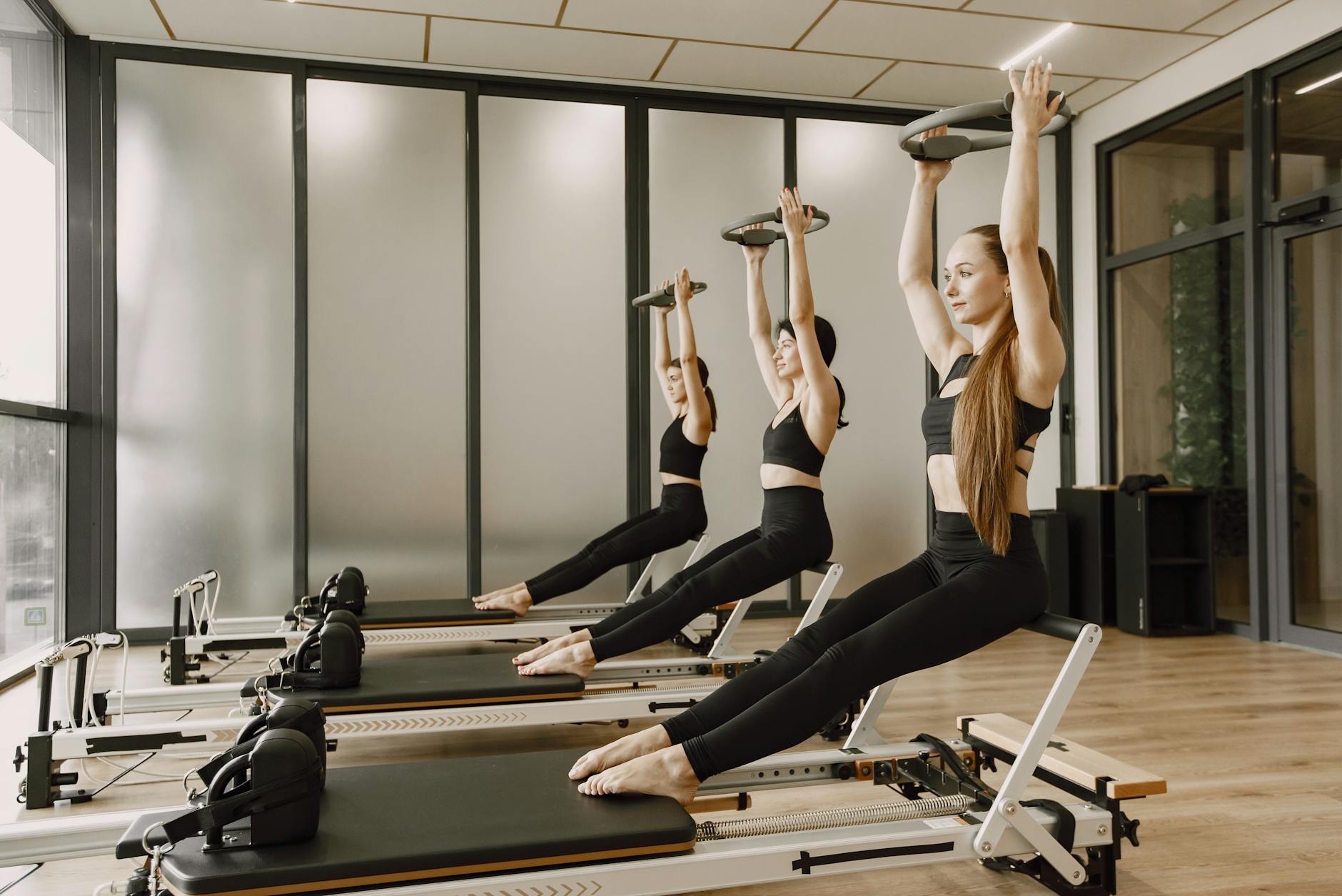
Pilates, an exercise practice invented by Joseph Pilates during the 1920s, was created as a way to promote mobility through the coordination of the mind and body. Today it has found itself amidst controversy as the internet delves into its supposed ties to conservatism.
Recent trends in female-dominated fitness spaces have transitioned from the desire to build strong bodies in the gym to living a soft, healthy life, specifically through Pilates and other low impact movements. The emphasis on a feminine lifestyle raised controversy on social media platforms like TikTok, where the belief that there is a direct correlation between the rise of Pilates and a decline toward traditional gender roles and conservative ideology amassed.
In a TikTok video posted by @LibraryTakes, creator @antonitalksgym argues the negative feelings surrounding this new culture of Pilates, focusing on how Pilates is being marketed toward women as a replacement for the gym. Antoni notes how “Pilates arms don’t build bulky arms, Pilates is feminine, whereas lifting weights is loud, standoffish, masculine.”
Dissenting voices to Antoni’s video misconstrue the critique of Pilates and its connection to conservatism. Pilates itself is not conservative, the marketing and culture surrounding it is. Terms like ‘Pilates arms’ and ‘Pilates body’ have been thrown around as marketing strategies to entice women who aim for a traditionally smaller stature with slimness as the epicenter of a desirable physique, bringing thinness back into vogue.
Pilates instructor Christina Arsenyan at WundaBar Pilates in the Los Angeles area worries about the expectations around results achieved through Pilates.
“Nowadays, there also exists this really huge deception online about the type of body that you get from doing [Pilates], so I do Pilates four times a week, if you walk past me at the beach you are never going to look at me and be like, ‘Oh my God. I want to have her body, like this crazy.’”
Avid Pilates goers rebut the idea that the exercise itself is not easy nor does it make anyone want to be conservative. In an interview with the New York Times, Natalia Mehlman Petrzela, history professor at the New School in New York City, made a passing comment about understanding the difficulty of Pilates.
“‘Make sure you include that I said Pilates is hard,’ Petrzela added with a laugh. ‘They’ll come for me otherwise.’”
Anyone who has stepped in or around the Pilates space, especially in big cities, knows that the ability to enter it long term is a commitment not easily maintained with basic salaries or full-time work schedules.
In areas like Southern California where Pilates has taken off in popularity, major cities like Los Angeles and Newport Beach have seen an influx of predominantly thin and lean young women in attendance.
“I watched as Pilates sort of morphed from something that was really about people gaining their confidence back, and it morphed into something that now is like, exclusively for women who are really beautiful, who have like, 100 units of Botox in their faces, who are probably on Ozempic, who are wearing these $400 matching sets to class,” Arsenyan notes in observing the shifting audience.
“When, like, all of the celebrities started going to the Alo Yoga Pilates lessons, and they started posting videos of them online, Pilates became something that was viewed as something that the elites were doing, something that the ideals were doing in society.”
The curated Pilates aesthetic displayed online is reminiscent of the controversial renewal of the trad-wife movement, with frontrunners like Ballerina Farm who promote images that center women in domesticity and motherhood.
Pilates spins off a new-age imagery that evolves past the tradwife movement, notably with cute workout sets and matching beverages creating a look that revolves around leisure and the ability to be divine feminine energy.
So what does this kind of lifestyle entail? For starters the must-have to any Pilates centered lifestyle is Pilates itself, and memberships to some studios are no joke.
In South Orange County’s Pilates scene, memberships can range anywhere from $100 to more than $300 per month depending on the preference of reformer or mat Pilates, the choice between the use of a Pilates machine or working out with foundational tools on a Pilates mat.
These prices only account for an eight-class month, which only scratches the surface of how unaffordable Pilates can be. For reference high-end gym Equinox offers unlimited single-club access memberships starting about $227.
In understanding the basic fees for just having a foot in the door, the internet has its critiques — a system of movement, initially created as free and accessible exercise, has become a financially exclusive lifestyle. Nutrition and similar expenditures add on to the cost of maintaining this kind of life, becoming synonymous with other unaffordable health spaces like grocery store Erewhon and wardrobes from Lululemon and Alo Yoga.
One can wonder how so many women can afford this kind of lifestyle, financially. For those who live in leisure consistently, many are stay-at-home wives or mothers whose days are not tied to working full-time jobs, suggesting access to both time and financial resources.
For some who document their day, like Nabila Cholida, life is going from Pilates to brunch to shopping to beauty treatments, all because “your husband made you a stay at home Pilates wife.”
As enticing as this lifestyle is — the focusing on themselves, and following healthy habits, could the messaging of it all be taken the wrong way?
The promotion of an idealized body combined with the access of time and wealth to maintain the ‘Pilates aesthetic’ can possibly lead impressionable women and even young girls to want a lifestyle that is realistically, unrealistic.
What stemmed from a popular new trend may be the reason why women descend back into wanting lives in stay-at-home roles. The exchange of independent futures for traditional gender roles and stereotypical archetypes may not be worth that 9 a.m. matcha and sculpt class.

Leave a Reply